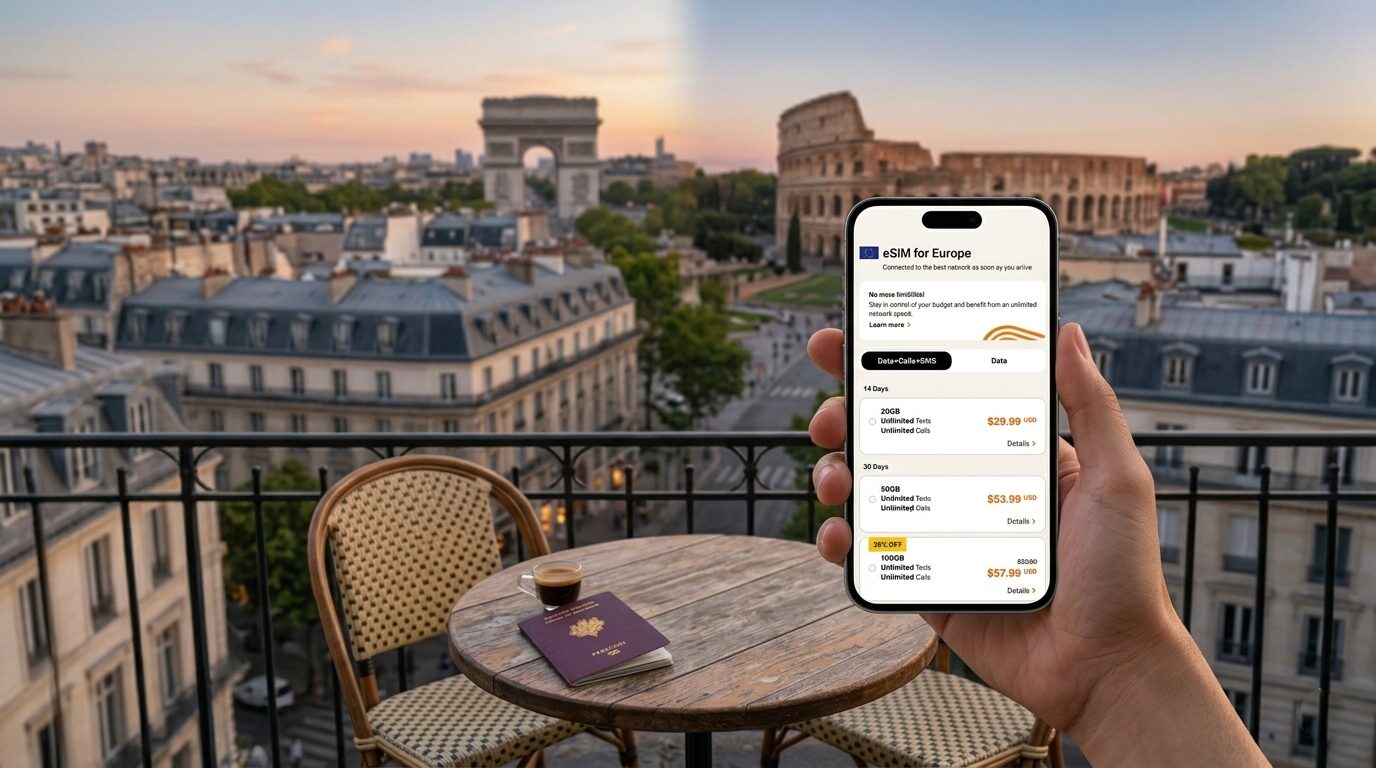
The Best eSIM for Travel That Actually Works Everywhere
Forgetting to buy a local SIM card upon arrival or facing shockingly high roaming fees is a common travel hassle, but the best eSIM for travel eliminates this by letting you purchase and activate a data plan online before your trip. It works by downloading a digital profile to your phone, which connects you to local networks instantly. This provides immediate connectivity without needing a physical card, saving time and money. Simply choose a plan for your destination, activate it when you land, and you’re online.
Choosing the Right Digital SIM for Your Journey
Selecting the best eSIM for travel begins by auditing your specific route and connectivity needs. For a single-country trip, a local provider plan often delivers superior latency versus a regional package. When choosing the right digital SIM for your journey, prioritize plans offering instant activation and top-up flexibility, avoiding pre-loaded eSIMs with strict expiration dates. Always verify your device is carrier-unlocked and eSIM-compatible before departure, as incompatibility is the most common failure point. Cross-reference coverage maps for your exact destinations—a “global” eSIM may have dead zones in rural areas where a local network partner performs better. A multi-profile eSIM is ideal for layering a local data pass with a backup international plan, ensuring seamless roaming without physical swaps.
Why physical SIM cards are becoming obsolete for globetrotters
For globetrotters, physical SIM cards are becoming obsolete because they create friction at every border. You waste time hunting for local shops, juggling tiny cards, and risking loss or damage mid-trip. In contrast, an eSIM delivers instant connectivity upon landing, letting you switch networks without swapping anything. The instant digital activation eliminates the “first-hour scramble” for local data. Why are physical SIM cards becoming obsolete for globetrotters? They cannot match the eSIM’s ability to store multiple profiles, letting you add a Japanese plan while still active on a German one—no hardware change required. That flexibility makes physical cards a needless burden.
How eSIM technology cuts roaming fees instantly
eSIM technology eliminates roaming fees by letting you instantly purchase and activate a local data plan upon arrival, bypassing your home carrier’s international tariffs. Instead of paying per-megabyte while abroad, you switch to a local eSIM profile at local rates, often slashing costs by 80–90%. Activation occurs via scanning a QR code or clicking a link, requiring no physical SIM swap. Your original number remains active for calls, but data routes through the cheaper local network. This immediate cut happens because the eSIM connects directly to in-country infrastructure, not your home provider’s roaming partners.
Q: How does eSIM technology cut roaming fees instantly?
It allows you to buy and connect to a local carrier’s data plan within minutes, replacing expensive roaming agreements with local pricing before you even leave the airport.
Key factors when selecting a mobile data partner abroad
When selecting a mobile data partner abroad for your eSIM, prioritize network coverage by verifying they partner with local Tier-1 carriers, not just budget MVNOs. Check if they offer pay-as-you-go top-ups instead of rigid monthly plans, giving you flexibility to adapt. Even a slightly pricier partner with responsive customer support outweighs a cheaper one that leaves you stranded without connectivity. Confirm if their data rolls over between trips or resets on a fixed cycle. Speed caps matter too—a partner throttling after a few GB defeats the purpose of reliable roaming for navigation, messaging, and essential apps.
Top-Rated Global eSIM Providers in 2025
For travel in 2025, top-rated global eSIM providers include Airalo for its extensive regional and global data packages, Holafly for unlimited data plans, and BNESIM for flexible pay-as-you-go options. These services offer instant activation without physical SIMs, covering countries like Japan, Spain, and the US seamlessly. Which provider is fastest for travel? Airalo generally prioritizes reliable LTE/5G roaming, while Holafly’s unlimited plans suit heavy users. Users often choose Airalo for short trips and Holafly for extended stays requiring constant connectivity.
Airalo: unmatched coverage across 190+ destinations
For travelers who refuse to be stuck without service, Airalo’s unmatched coverage across 190+ destinations is a total game-changer. You land in Japan, hop over to Peru, then zip to Morocco—all without switching SIMs or hunting for Wi-Fi. Most providers cover maybe 50 countries; Airalo practically blankets the globe. It’s literally one eSIM for almost everywhere you’d feasibly go, from major hubs to tiny islands. No hunting for local SIMs on arrival, no roaming shock bills. Just install once, top up if needed, and stay connected across continents like it’s nothing. It’s the set-and-forget solution for globe-trotters.
What makes Airalo’s coverage across 190+ destinations stand out from smaller regional eSIMs? It means you can plan a multi-country trip—like a week in Greece, then a week in Turkey—using one single eSIM plan, avoiding the hassle of buying separate local SIMs or juggling multiple eSIM profiles for each border crossing.
Holafly: unlimited data plans for heavy users
For heavy users who need constant connectivity, Holafly’s unlimited data plans are a game-changer. You get true unlimited data, so no throttling after hitting a cap—perfect for streaming maps or video calls without stress. Just remember, tethering might be restricted on some plans, so check before you rely on your hotspot. Activation is instant via eSIM, and coverage spans 190+ countries, making it ideal for multi-stop trips where you just want data to work.
Nomad: flexible packages for multi-country trips
For travelers navigating multiple nations, Nomad’s flexible packages for multi-country trips provide a practical solution by allowing users to combine regional plans from overlapping coverage zones. This avoids the need to purchase separate eSIMs for each border crossing. Each data package functions independently, so you can activate a regional Asia plan alongside a Japan-specific top-up without conflicts. The selection of package durations, ranging from one day to 30 days, gives precise control over data expiration across different legs of the journey. This granularity ensures you only pay for the coverage period you actively use per country, making overbuying unnecessary.
Orange Holiday: regional options for Europe and Africa
For travelers needing broad connectivity, the Orange Holiday regional eSIM for Europe and Africa provides a single data plan spanning 30 countries across both continents. This eliminates the need to swap SIMs when crossing from Spain into Morocco or visiting South Africa after France. The plan typically offers a set data allowance (often around 10-20 GB) valid for 14 days, with local European and African numbers included for calls and SMS within the region. It activates upon arrival in any covered country and operates on Orange’s own networks for consistent speeds. Q: Can I top up the Orange Holiday regional eSIM if my data runs out mid-trip? A: Yes, additional data top-ups are available for the same 30-country region, though you must purchase them before your initial plan expires.
Google Fi: seamless switching for frequent flyers
For frequent flyers connecting through multiple hubs, Google Fi excels by enabling seamless switching between carriers without manual network selection. The service automatically latches onto the strongest local signal as you cross borders, eliminating dropouts during layovers. This real-time automated network handoff means your data session remains uninterrupted whether you land in Tokyo, Frankfurt, or São Paulo. T-Mobile’s international roaming agreements power this, but the key advantage is that Google Fi manages the transition algorithmically—your device never pauses to reauthenticate. You simply keep using maps, messaging, or booking apps as the plane taxis.
Google Fi’s seamless switching automatically reconnects you to the fastest available local network during transit, keeping data flowing without manual intervention between flights.
Region-Specific SIM Solutions for Travelers
For travelers, the best esim for travel hinges on region-specific SIM solutions that optimize connectivity and cost. Rather than a global plan, selecting a tailored eSIM for Europe ensures seamless roaming across Schengen countries, while a dedicated Asia-Pacific SIM provides superior speeds in Japan or South Korea. Regional eSIMs eliminate multi-carrier switching by connecting directly to dominant local networks, delivering consistent 4G/5G access. This approach avoids the throttling often found in broad “global” plans, offering dedicated local IP addresses and lower latency. For multi-destination trips, stacking a Southeast Asia eSIM alongside an Oceania plan prevents coverage gaps, ensuring your primary device remains reliable without physical swaps. Prioritize region-specific esim for travel plans to pay only for relevant coverage and avoid unnecessary data bloat.
Best eSIMs for backpacking across Europe
For backpacking across Europe, an eSIM like Airalo’s regional Europe plan offers seamless connectivity across 40+ countries without swapping SIMs. Holafly’s unlimited data packages are ideal for heavy maps and social media use, while Ubigi provides budget-friendly gigabyte rolls. Avoid per-country plans; choose coverage spanning Schengen states for spontaneity. A 10–30 GB regional eSIM typically covers a month of train apps, hostels, and translations. Compare pricing for 30-day validity:
| Provider | Data | Best For |
|---|---|---|
| Airalo | 5–20 GB | Multi-country flexibility |
| Holafly | Unlimited | High daily usage |
| Ubigi | 1–50 GB | Tight budgets |

Affordable data plans for exploring Southeast Asia
For budget-conscious travelers, the best eSIM for travel often comes from regional providers offering affordable data plans for exploring Southeast Asia. These plans typically start under $10 for 7–15 days, covering multiple countries like Thailand, Vietnam, and Indonesia. Look for packages bundling 10–30GB of high-speed data, sufficient for maps and messaging, with throttled speeds afterward. Providers like Airalo and Holafly offer such flexible, pay-as-you-go options, allowing easy top-ups without physical SIM swapping or local registration hassles.
Reliable connectivity options in North America
For seamless travel across the US and Canada, prioritize an eSIM that taps multiple Tier-1 networks like AT&T, T-Mobile, and Rogers. This multi-network roaming strategy automatically switches you to the strongest local tower, eliminating dead zones in remote national parks or dense urban cores. Avoid single-carrier eSIMs, as coverage gaps appear between cities. Instead, choose a provider that aggregates major operators for consistent 5G speeds during cross-country road trips or layovers in Montreal.
- Access to both 5G and LTE bands from AT&T, T-Mobile, and Bell for widespread coverage from coast to coast.
- Instant failover to an alternative network if your primary signal drops in rural areas or subway tunnels.
- Preloaded data packages with North American zoning to avoid unexpected roaming charges when crossing the US-Canada border.
Budget-friendly picks for South America trips
For South America, budget-friendly eSIMs for travel like Airalo’s regional plan offer the best value, covering multiple countries without per-country fees. Pay-as-you-go options from Holafly provide generous data caps for under $20, ideal for extended Backpacking. Prepaid local eSIMs from Claro or Movistar often beat tourist plans if you stay in one country. Prioritize plans with at least 5GB over 30 days to avoid top-ups. Compare validity and price per gigabyte in the table below.
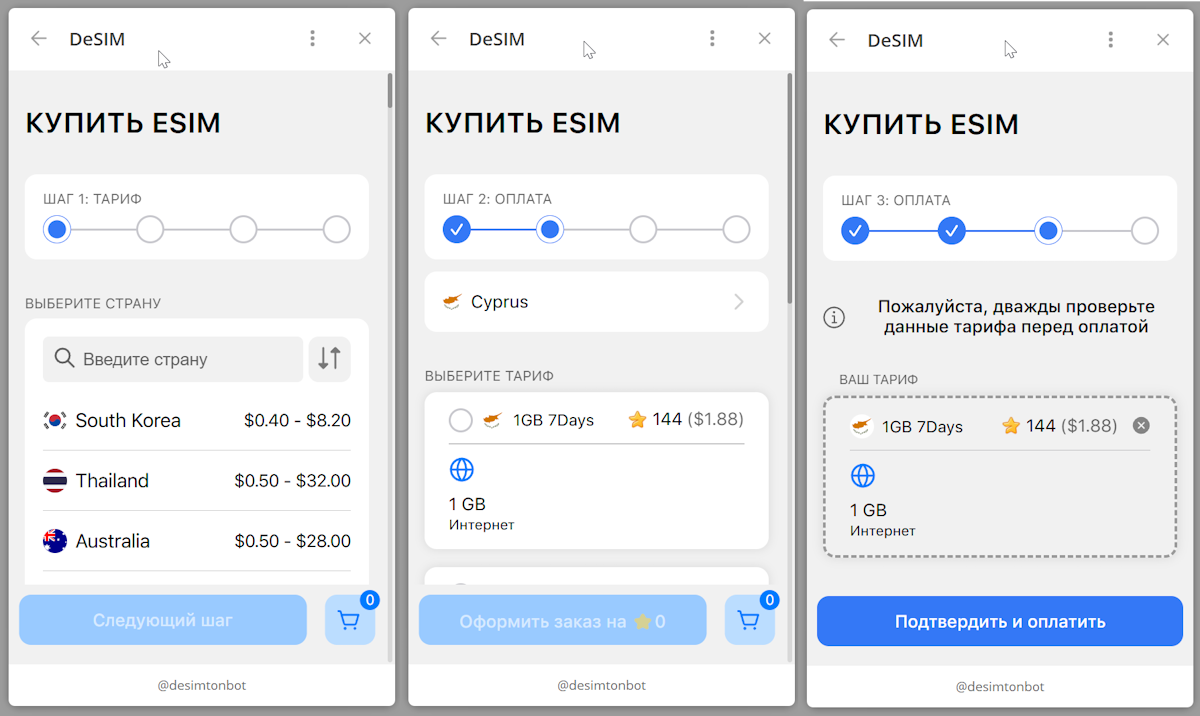
| Provider | Price (30 days) | Data & Coverage |
| Airalo Regional | $15 | 3GB across 16 countries |
| Holafly Global | $19 | 5GB across 20 countries |
| Claro Local eSIM | $10 | 4GB in one country |
Middle East and Africa: covering remote areas
For travelers to the Middle East and Africa, covering remote areas requires an eSIM that prioritizes regional multi-network roaming. In the Sahara, Namib Desert, or rural Oman, single-carrier eSIMs often fail; choose providers like Airalo or Holafly that aggregate local partners such as MTN, Zain, or Orange. This ensures you can switch between networks manually in real time if signal drops. Preload maps and offline translation tools, as data speeds in remote zones may drop to 3G. Avoid plans with strict fair usage policies on tethering, as physical infrastructure is sparse.
| Aspect | Middle East Remote Areas | Africa Remote Areas |
|---|---|---|
| Primary Carriers | Zain, STC, Etisalat | MTN, Orange, Vodacom |
| Typical Max Speed | 4G (urban fringe); 3G (deep desert) | 3G/HSPA+ (often throttled) |
| eSIM Advantage | Instant carrier selection near borders | Bypass physical SIM scarcity |
Comparing Data Caps, Speeds, and Pricing
When comparing the best eSIM for Japan eSIM travel, evaluate data caps against your typical usage: light browsing suits small caps, while streaming demands high-caps. Speeds are often deprioritized after a certain threshold, so check if your plan’s full speed is throttled after the first few gigabytes. Pricing varies widely—a lower per-GB cost may be offset by a short validity period. Note that a slightly higher upfront price often includes unthrottled peak speeds and a larger, flexible data cap. Ultimately, balance low pricing with sufficient, uncapped speed for your destination’s network conditions.
Unlimited vs. capped plans: what suits your usage
For travel, choose between unlimited and capped eSIM plans based on your specific data habits. Unlimited plans suit heavy users who stream video, navigate constantly, or work remotely without monitoring consumption. However, these plans often throttle speeds after a daily fair-use threshold, making them poor for high-bandwidth tasks. Conversely, capped plans offer a fixed data amount, like 5GB or 10GB, with full-speed access until depletion; they are ideal for light users who primarily map, message, or check email. Consider whether you prefer predictable, full-speed service or unlimited volume with potential slowdowns, as capped plans provide superior speed consistency for practical tasks.
Hidden fees and activation costs to watch for
When comparing eSIMs for travel, scrutinize the checkout for hidden activation costs that inflate the base price. Some providers add a one-time “service fee” or “connection charge” that appears only after you enter your credit card details. Others bury a mandatory “top-up” or minimum purchase requirement, forcing you to pay extra for data you may not need. Watch for “free trial” offers that later require a non-refundable setup fee. Also, check if the price displayed includes taxes and local regulatory charges, as these can add 5-20% unexpectedly. Always read the fine print on the payment page before confirming the purchase to avoid these surprise costs.
4G vs. 5G availability by provider
When picking the best eSIM for travel, 4G vs. 5G availability by provider really matters for your daily use. Most plans default to reliable 4G LTE, which covers nearly every destination you’ll visit. For faster 5G speeds, check the provider’s coverage map: Airalo often includes 5G in major cities like Paris or Tokyo, while Holafly focuses on 4G in rural areas to keep costs low. Nomad offers a mix, but only their “Global” plans consistently unlock 5G. A quick table shows the difference:
| Provider | 4G Availability | 5G Availability |
|---|---|---|
| Airalo | Full coverage | Select cities only |
| Holafly | Strong everywhere | Rare, mainly urban |
| Nomad | Robust network | On premium tiers |
Always confirm on the provider’s app before buying, as 5G availability can shift by region.
Shared family plans versus individual travel SIMs
When weighing shared family plans versus individual travel SIMs, your group’s data appetite dictates the winner. A shared plan pools a single data cap across multiple devices, often slashing per-person costs if everyone stays under the limit—but one heavy streamer can throttle the whole family. Individual SIMs give each traveler a private, speed-consistent data bucket, preventing bottlenecks. To choose, follow this sequence:
- Estimate total group consumption per day, then split it per person.
- If a shared cap offers enough headroom without constant monitoring, the plan saves money.
- If anyone needs high-speed video or work calls, pick individual SIMs for zero contention.
How to Install and Activate Your Digital SIM
To activate the best eSIM for travel, first ensure your device is unlocked and connected to Wi-Fi. Scan the QR code provided by your provider immediately after purchase, or manually enter the activation details under your phone’s cellular settings. Set this line as your primary data line to avoid roaming charges on your home SIM. For immediate connectivity, activate the eSIM just before departure, as some plans start the clock upon installation. A common pitfall is activating too early, which can waste a day of your travel plan if the timer begins pre-trip. After installation, restart your device, then toggle data roaming on—this final step is essential for the eSIM to latch onto local networks abroad.
Step-by-step setup for iPhone and Android devices
For iPhone, start by scanning the QR code from your provider within Settings > Cellular > Add Cellular Plan. On Android, navigate to Settings > Connections > SIM Manager > Add Mobile Plan. After scanning, label your travel line—e.g., “Europe Data”—to distinguish it from your primary SIM. Toggle the new line for data and ensure your home line remains on for calls. Activating a digital SIM before departure prevents connectivity gaps. Always test the secondary line by sending a ping before leaving your home network.
On iPhone, go to Settings > Cellular > Add Cellular Plan; on Android, go to Settings > Connections > SIM Manager > Add Mobile Plan—then scan the provided QR code, label the plan, and toggle data to the new line for immediate activation.
Troubleshooting common installation errors
When installing your digital SIM for travel, a common error is an “Invalid QR Code,” often caused by using a screenshot instead of scanning directly from the original email or provider’s app. Ensure your device is unlocked and connected to Wi-Fi during activation. If installation fails, manually entering the SM-DP+ address provided by your eSIM provider can bypass connectivity issues. A frequent issue is “No cellular plan added” after scanning; restarting the device typically resolves this eSIM activation failure.
- Scan the QR code directly from the provider’s email, not from a screenshot.
- Restart your phone after scanning if the plan doesn’t appear immediately.
- Manually input the SM-DP+ address if the QR code fails to scan.
Keeping your home number active while using eSIM
To keep your home number active while using an eSIM for travel, enable dual SIM mode in your device settings. Assign your home eSIM for voice and SMS only, while designating the travel eSIM for mobile data. In iOS, go to Settings > Cellular > Default Voice Line; on Android, navigate to Connections > SIM Manager. For seamless connectivity, forward your home number to a VoIP service like Google Voice or Skype, ensuring calls and texts reach you over the travel eSIM’s data connection. Follow this sequence:
- Turn off data roaming on your home eSIM.
- Set the travel eSIM as the primary data line.
- Enable Wi-Fi Calling on the home eSIM if supported for over-data access.
This prevents unexpected roaming charges while maintaining your home number’s activity.
Dual SIM tips for managing two lines simultaneously
For travelers, managing two lines simultaneously requires precise configuration. Assign your primary SIM for iMessage and FaceTime via Settings > Cellular > Default Voice Line, while the digital eSIM handles data. Disable “Allow Cellular Data Switching” to prevent roaming charges if the primary line has no plan. Verify your carrier supports Wi-Fi Calling over Cellular Data to route native calls through the eSIM’s internet. Finally, label each line (e.g., “Home” and “Spain Data”) to avoid confusion when dialing or sending SMS.
| Tip | Action |
|---|---|
| Default voice line | Set to primary SIM for SMS/calls |
| Data switching | Disable to prevent automatic fallback |
| Wi-Fi Calling | Enable with eSIM data as backup route |
| SIM labels | Rename lines for quick selection |
Customer Feedback and Real-World Performance
When choosing the best esim for travel, real-world feedback consistently boils down to one thing: consistent, reliable data when you actually need it. Travelers frequently praise providers like Airalo for easy setup, but note that speeds can slow to a crawl during peak hours in busy cities like Paris or Tokyo.
The key insight is that a cheap plan with glowing app store reviews means nothing if it drops to 2G speeds at a crowded train station.
For performance, users on Reddit and travel forums consistently recommend looking for eSIMs that use multiple local carrier partners, like Holafly or Ubigi, as they automatically switch to a stronger network if one gets congested. Always check recent location-specific feedback on social media before you buy.
Reddit and forum insights on provider reliability
Reddit and travel forum discussions consistently highlight that provider reliability hinges on specific destinations rather than universal reputations. Users frequently report that Airalo offers dependable connectivity in North America and Europe, while Ubigi is praised for stable speeds across Asia without throttling. Conversely, posts on r/digitalnomad caution that budget providers like Holafly experience frequent downtime in rural regions. Real-world feedback from frequent travelers reveals that inconsistent activation and slow customer support are recurring complaints for lesser-known esim brands. The consensus is that established providers with localized partnerships deliver superior reliability.
Reddit and forum insights indicate that no single esim is reliably best everywhere; provider performance varies sharply by country, with user reports being the most trustworthy gauge of real-world stability.
Speed test results from popular travel routes
In assessing the real-world travel eSIM performance, speed test results from popular travel routes reveal distinct variability. Transatlantic flights to Paris show Airalo’s 5G averaging 120 Mbps at CDG, while Holafly drops to 45 Mbps on the RER B line. Cairo’s tourist routes see Ubigi delivering consistent 35 Mbps near the Pyramids, whereas competing eSIMs often throttle to 10 Mbps after 200 MB. Tokyo’s Shinkansen bullet train routes highlight Nomad eSIM’s sustained 80 Mbps streaming capability, outperforming local prepaid cards during peak hours. These granular, route-specific benchmarks are critical for choosing the best eSIM, especially for data-heavy navigation and video calls.
Common complaints and how providers address them
Travelers frequently complain about eSIM activation delays and unclear data limits. Providers address activation issues by offering instant QR code delivery and 24/7 live chat support for manual troubleshooting. Complaints about throttled speeds after fair-use thresholds are met with transparent top-up options or money-back guarantees for unused data. Users also report problems with dual-SIM conflicts; top eSIMs now include auto-switching profiles that prioritize the local data line. Common billing errors for auto-renewals are resolved via instant refund policies within 14 days.
- Activation stuck? Providers offer instant QR generation and real-time helpdesk.
- Data caps hit? Clear notifications plus one-click top-up purchases prevent surprises.
- Device compatibility doubts? Free pre-purchase compatibility check tools prevent in-travel failures.
Future Trends in Travel Connectivity
The future of travel connectivity hinges on seamless, instant global integration, where the best eSIM for travel evolves beyond mere data access. Instead of swapping profiles, travelers will rely on AI-driven eSIMs that automatically select the strongest local network for optimal speed while routing calls over Wi-Fi to cut costs. A key insight emerges:
connectivity will become location-aware, pre-loading offline maps and translating local signage without prompting.
These next-gen eSIMs will bundle zero-latency streaming for hotel entertainment and dedicated bandwidth for live translation earbuds, making the concept of “best” about proactive, context-sensitive service rather than cheap gigabytes. Travelers will simply arrive and remain flawlessly linked.
How roaming regulations are changing globally
Global roaming regulations are shifting to dismantle cross-border data barriers, directly impacting your eSIM choice. The European Union’s “Roam Like at Home” principle is expanding, with similar mandates emerging in regions like the Association of Southeast Asian Nations (ASEAN), forcing travel eSIM providers to offer unified regional data pools. This regulation-driven pressure creates a clear sequence for users: first, carriers must eliminate surcharges within a bloc; second, they bundle multiple nations under a single, affordable data bucket. Consequently, the best eSIM for travel now capitalizes on these mandates to deliver seamless, zone-based plans rather than per-country SIMs.
- Regions adopt “Roam Like at Home” rules, removing per-country fees.
- Providers consolidate nations into single data pools.
- Users pick a regional plan, bypassing local SIM swaps.
Upcoming eSIM-only networks and partnerships
Upcoming eSIM-only networks and partnerships are reshaping the best esim for travel landscape. These digital-first operators, like Airalo’s expanding local partner alliances, bypass physical SIMs entirely, offering seamless data packs across multiple borders. Expect new tie-ups with regional carriers to give travelers hyper-local rates without roaming fees. For example, a Japan-specific eSIM network might bundle bullet train Wi-Fi access, while a pan-European partnership could unlock unlimited 5G at local prices. These eSIM-only networks prioritize instant activation and zero physical hassle, making them ideal for multi-destination trips. Q: How do these networks differ from standard eSIM providers? They rely on direct, exclusive partnerships, not resellers, ensuring faster speeds and cheaper rates for targeted regions.
Sustainability benefits of ditching plastic SIM cards
Ditching plastic SIM cards for an eSIM cuts physical waste entirely, eliminating the petroleum-based cards and packaging that clog landfills. For travelers, this means zero plastic pollution per trip, a direct reduction in your environmental footprint. You also avoid the energy spent manufacturing, shipping, and disposing of plastic cards. Each digital profile spares resources, from the trees for paper inserts to the fuel for transport. The result is a cleaner travel habit that requires no wasteful materials.
- Eliminates single-use plastic cards and blister packs from every journey.
- Reduces carbon emissions tied to card production and global shipping.
- Prevents plastic card waste from ending up in oceans or ecosystems.
- Removes the need for paper manuals and plastic packaging materials.
Why Switching to a Digital SIM Card Simplifies International Trips